
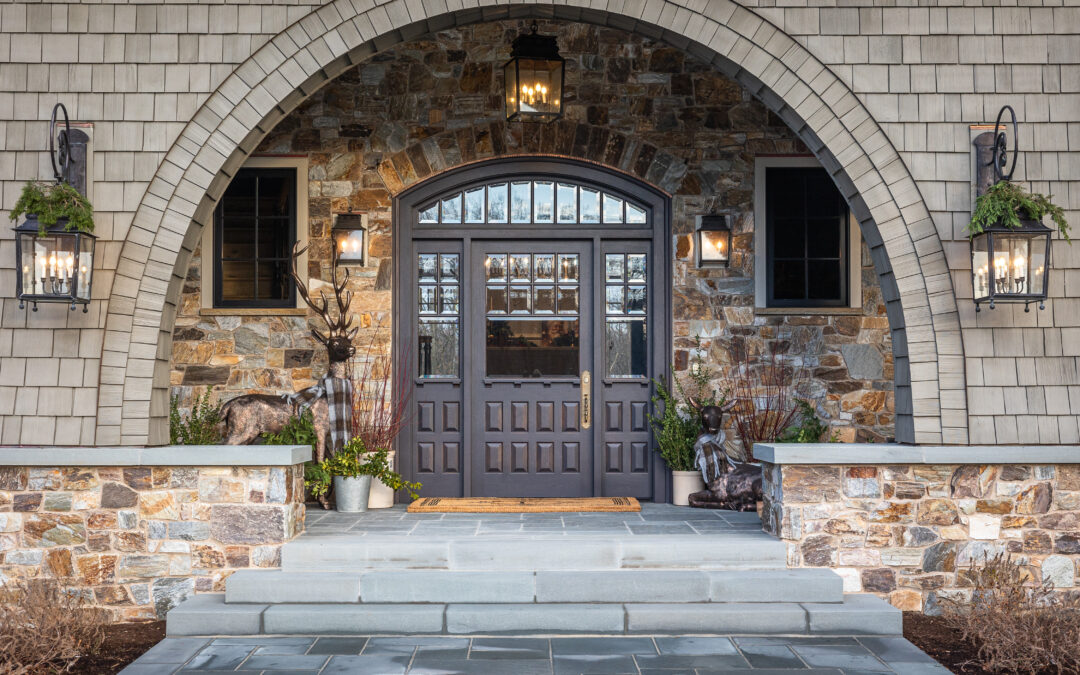
There is a myth among custom door buyers that a one-piece solid wooden door is more durable, more robust, and more desirable than an engineered wooden door. However, in practical use, this isn’t true. Explore what engineered and solid wood actually are and the proven benefits that make engineered doors the smarter choice for both interior and exterior applications.
What Are Solid Wood Doors?
Solid wood doors are crafted from natural timber and are assembled with panels and solid boards. They are typically made from hardwoods, like oak or mahogany, and softwoods, like pine.
Each door showcases the wood’s unique grain pattern, natural character, and weight that comes with traditional craftsmanship.
What Are Engineered Wood Doors?
Engineered wood doors are constructed from multiple layers of real wood veneer. Each wood surface is bonded to a stable core. The core can be constructed from multiple pieces of wood glued together with a special adhesive or from plywood. The stiles and rails use a wood core made of multiple wood pieces, and the panels use plywood or multiple pieces of wood core, depending on the design.
The defining feature of engineered wood doors is their construction, in which each layer is stacked with its grain running perpendicular to the layers above and below it.
The layered construction makes the doors more stable and resistant to expansion and contraction. The result is a door with genuine wood beauty and superior dimensional stability.
Engineered vs. Solid Wood Doors
Below, we explore five reasons the right choice for both exterior and interior doors is those with longevity, beauty, strength, stability, and resilience built in. See why an engineered door crafted with layers of wood inside an outer veneer is the superior choice.
1. Durability
Wood is naturally affected by temperature and humidity changes. The fibers of the wood absorb heat and moisture, causing it to flex, shrink, and expand in response to atmospheric conditions. This can warp the door and make it fit poorly within its jamb, letting in drafty air.
With an engineered wooden door that uses multiple layers of wood and a wood veneer surface, the door is generally more stable and resistant to dimensional changes. The multilayer construction of engineered wood doors distributes stress evenly in all directions, preventing the uneven movement that warps solid wood. For both interior and exterior applications, engineered doors maintain their shape season after season.
2. Enhanced Moisture Stability
High-humidity environments expose the real difference between engineered and solid construction. Kitchens, bathrooms, coastal properties, and commercial spaces with moisture exposure demand doors that won’t fail under stress.
Engineered doors offer a structural advantage due to their layered construction. This inherent design enables engineered doors to perform more reliably in high-humidity environments, significantly reducing the risk of moisture-related issues such as warping.
3. Consistent Quality
The creation of engineered wood doors involves a highly controlled manufacturing process, allowing for greater consistency in quality than what is typically achievable with solid timber. Each layer is carefully selected and bonded, creating a uniform door free from the unpredictable grain irregularities or hidden weaknesses that can affect solid wood. This level of manufacturing control results in a more reliable and structurally sound door.
4. Customization of Design
Cladding a custom wooden door in a high-quality veneer allows for greater flexibility for architects, builders, or homeowners to choose their desired look. The style of the door can be more adaptive to best suit a building’s exterior or interior.
5. Improved Sound and Thermal Insulation
The layered core of engineered doors offers superior natural insulation. Multiple layers of material absorb and dampen sound, making engineered doors exceptionally effective at reducing noise. For interior doors, this can be highly desirable, especially in commercial or office settings. For exterior doors, unwanted noise from outside can be blocked for a more peaceful working or living space.
Why the Myth That Solid Wood Is Better Persists
The belief that solid wood doors are superior has deep roots. Solid wood has been the building standard for centuries, carrying an association with luxury and authentic craftsmanship. There’s an idea that solid materials feel inherently better than engineered ones. Additionally, the weight and tactile quality of solid wood create a premium impression that influences perception.
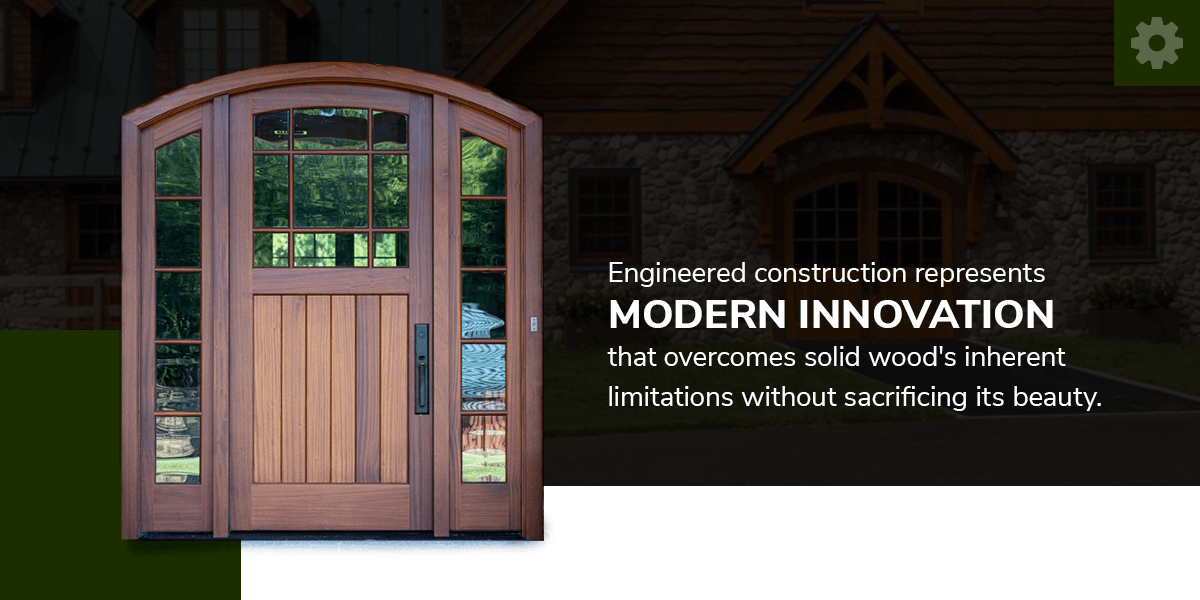
However, perception doesn’t equal performance. Engineered construction represents modern innovation that overcomes solid wood’s inherent limitations without sacrificing its beauty.
Frequently Asked Questions About Engineered Wood Doors
Here are some common questions about choosing a solid wood or engineered wood door:
How Long Do Engineered Doors Last?
With proper installation and routine care, engineered doors can last for decades. The multilayer construction and quality wood veneer provide consistent performance throughout the door’s lifespan, actively distributing stress evenly and resisting warping that often affects solid wood.
Can Engineered Wood Doors Be Repaired or Refinished?
Yes, engineered doors with a real wood veneer can typically be refinished or have minor repairs applied to their surface, similar to solid wood doors.
The door can typically be refinished by lightly sanding and applying new paint, stain, or clear coat, depending on the veneer thickness and type. Serious damage that penetrates through the veneer may be more challenging to repair seamlessly.
How Do Engineered Wood Doors Perform in Cold or Hot Climates With Significant Temperature Fluctuations?
One of the main benefits of engineered wood for doors is that it is specifically designed to perform in climates with wide temperature swings. Their multi-layered construction counteracts the natural expansion and contraction that often causes solid wood to warp or crack. This structural stability allows engineered doors to maintain their shape, fit, and performance consistently, even when exposed to hot or cold conditions.
Engineered Wooden Doors: The Superior Choice
Although a solid wooden door may seem like the most desirable choice, an engineered door outshines it for durability, temperature, and moisture management, long-term performance, and more. For more information and to speak with an expert when choosing the doors for your next project, contact Vintage Millwork & Restoration.


